MIC Symposium 2025: Multi-Scale Imaging Across Modalities
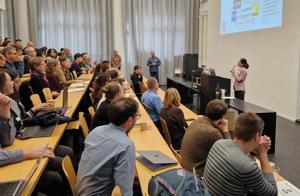
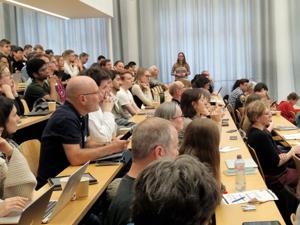
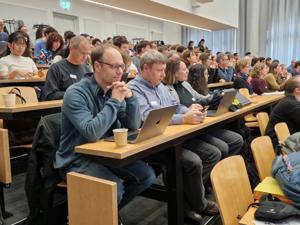
The annual Microscopy Imaging Center (MIC) Symposium, held on November 14, 2025, celebrated how cutting-edge technologies are advancing our ability to visualize biological structures and function across a vast range of resolutions.
This year's theme, “Multi-Scale Imaging Across Modalities,” showcased state-of-the-art technical advancements and emerging techniques essential for modern biomedical research. The day was structured into three main sessions, covering the entire imaging scale from high-resolution electron microscopy to novel optical approaches and X-ray microtomography.
1. Possibilities of 3-Dimensional Electron Microscopy
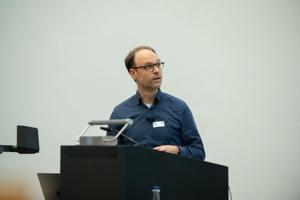
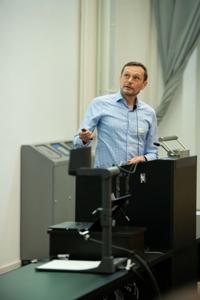
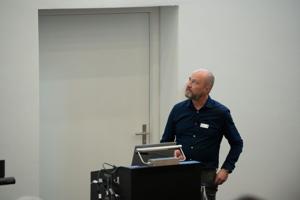
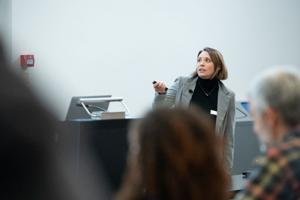
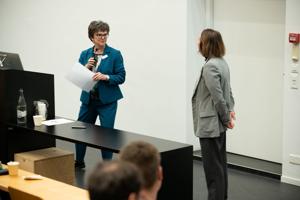
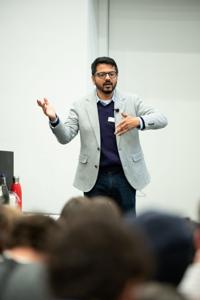
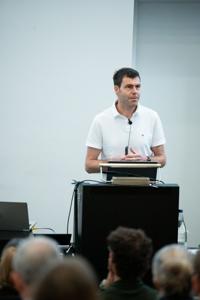
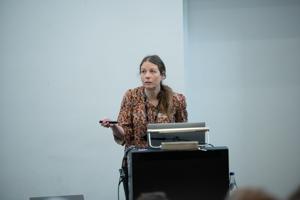
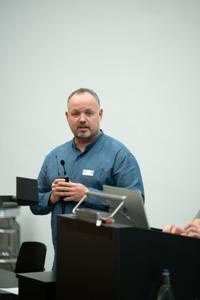
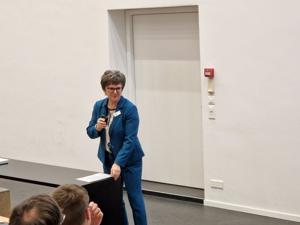
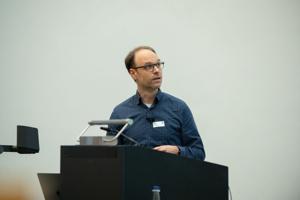
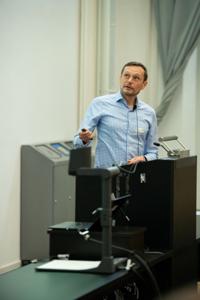
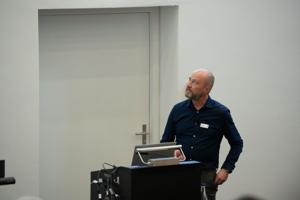
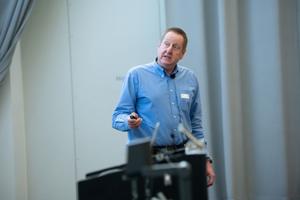
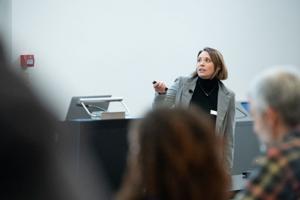
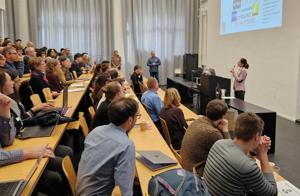
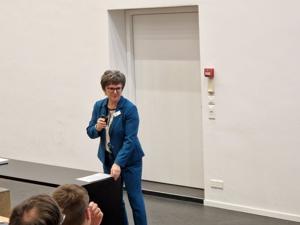
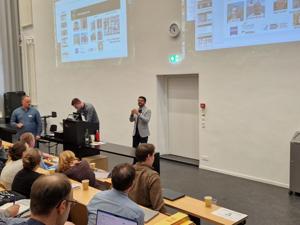
The day kicked off with a Welcome from Nadia Mercader, UniBe’s Medical Facultys Vice Dean. The first main session was chaired by Ruslan Hlushchuk. Benoît Zuber (University of Bern) started the session by outlining practical strategies, tips, and tricks for optimizing Serial Block-Face Scanning Electron Microscopy (SBF-SEM). Next, Christel Genoud (University of Lausanne and EPFL) provided an overview of volume electron microscopy (volume EM) techniques on their platform, showing how they bridge the gap between ultrastructural detail and large-volume context. Kedar Narayan (National Cancer Institute, NIH, USA) concluded the session, focusing on moving "Towards truly quantitative volume electron microscopy" by leveraging AI-based solutions for large-scale segmentation of cellular ultrastructure.
2. Advancements in Optical Microscopic Techniques
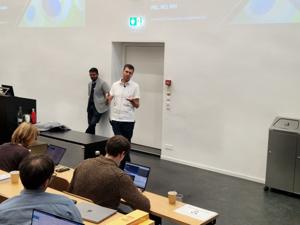
Chaired by Britta Engelhardt, this session explored the latest in optical imaging. Laura Batti (Wyss Center for Neuroimaging and Neurobiology, Geneva) highlighted how Light-Sheet Microscopy is empowering advancements in neuroscience and medicine, allowing for imaging of entire, cleared organs with high resolution. Following this, Christian Soeller (University of Bern) presented the MIC's recently established super-resolution pipeline, illustrating its practical applications from the micrometer to the single nanometer scale. Isto Kristian Jänönen (Thermo Fisher Scientific) gave a presentation on the Invitrogen EVOS S1000 Spatial Imaging System and its role in multiplexed IHC workflows for spatial biology.
3. Emerging Techniques for Biological Imaging
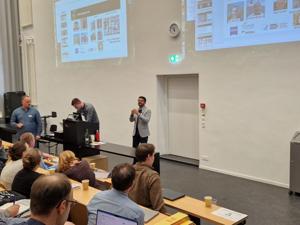
The final session, chaired by Steven Proulx, focused on novel imaging modalities. Ivano Romano (Evident Europe) detailed new developments in confocal microscopy, including improvements in speed, sensitivity, and the game-changing dynamic range of the Fluoview4000 system. Robert Prevedel (EMBL Heidelberg, Germany) discussed "Unconventional optical approaches," including advancements in Brillouin microscopy for capturing cellular and tissue visco-elasticity. The symposium concluded with Georg Schulz (University of Basel), who illuminated the potential of cellular-resolution X-ray microtomography for non-destructive biomedical research, achieving voxel sizes down to 180nm.
Industry Exhibition and Organization
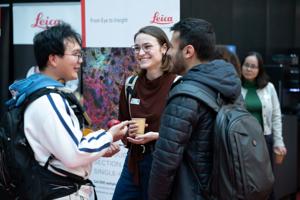
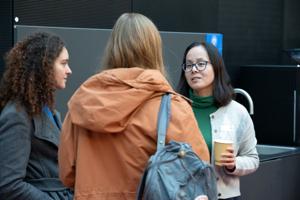
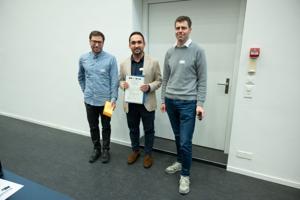
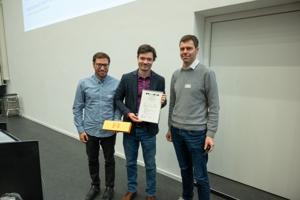
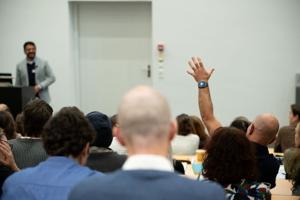
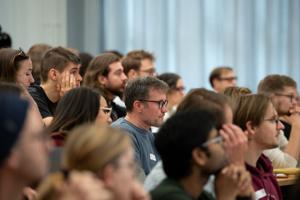
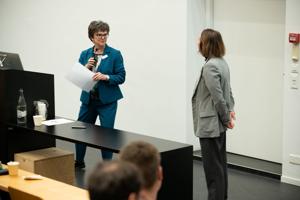
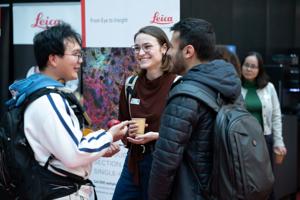
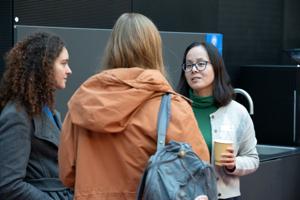
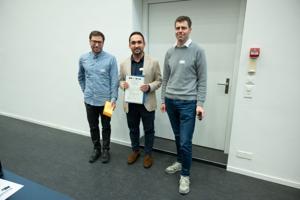
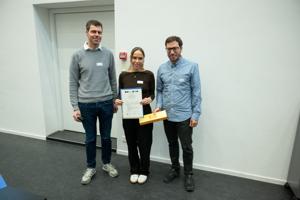
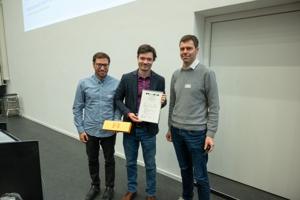
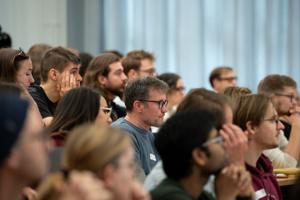
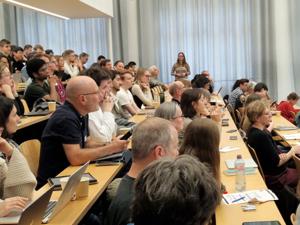
Before the lunch break, a certificate award was presented to the graduates of the CEM PhD program: Jana Leuenberger, Oleksiy Khoma and Mohammadamin Khosrozadeh. Throughout the day, attendees engaged in lively discussions over food and drink, both during the lunch break and dedicated coffee breaks. The industrial exhibition allowed visitors to find out about the latest industry developments, thanks to the generous support of sponsors, including Zeiss, Evidents, Nikon, Thermo Fisher Scientific, and Vitaris.
The MIC Symposium was once again a great success, running smoothly thanks to the MIC administration team and the scientific committee: Britta Engelhardt, Ruslan Hlushchuk, and Steven Proulx. The event was also approved for a 0.5-day credit for continued education in animal experimentation in the Canton of Bern.
Impressions
Confirmed Speakers
- Laura Batti, Dr.
Wyss Center for Neuroimaging and Neurobiology, Geneva - Christel Genoud, Prof.
Dubochet Center for Imaging (DCI) - Georg Schulz, Dr.
Department of Biomedical Engineering, University of Basel - Kedar Narayan, Ph.D.
National Cancer Institute, NIH, USA - Robert Prevedel, Dr.
European Molecular Biology Laboratory (EMBL), Heidelberg, Germany - Christian Soeller, Prof.
Institue for Physiology (PYL), University of Bern - Benoît Zuber, Prof.
Institute of Anatomy (ANA), University of Bern
MIC Symposium Gallery